Introduction
You might have come across 264.68.111.161 while browsing your network logs or checking online connections. It can seem confusing at first. What does this string of numbers even mean? Is it safe, or should you be cautious? In this article, we’ll break it down for you. You will learn exactly what 264.68.111.161 represents, how it is used, potential risks, and the practical steps you can take if it appears on your system.
By the end of this guide, you’ll have a solid understanding of this IP address, the technology behind it, and what it might mean for your privacy and online activity. Whether you’re a casual internet user or someone who likes to monitor network activity, this guide is tailored to make it simple and actionable.
What is 264.68.111.161?
An IP address, like 264.68.111.161, is a unique identifier for devices on a network. Think of it as your device’s home address on the internet. It helps systems communicate with each other.
However, if you notice unfamiliar IP addresses like this in your network logs, it’s natural to feel concerned. Understanding the structure of an IP address can help you determine whether it is normal traffic or something to watch out for.
- IP addresses are usually divided into four groups of numbers, separated by periods.
- Each group is called an octet and can range from 0 to 255.
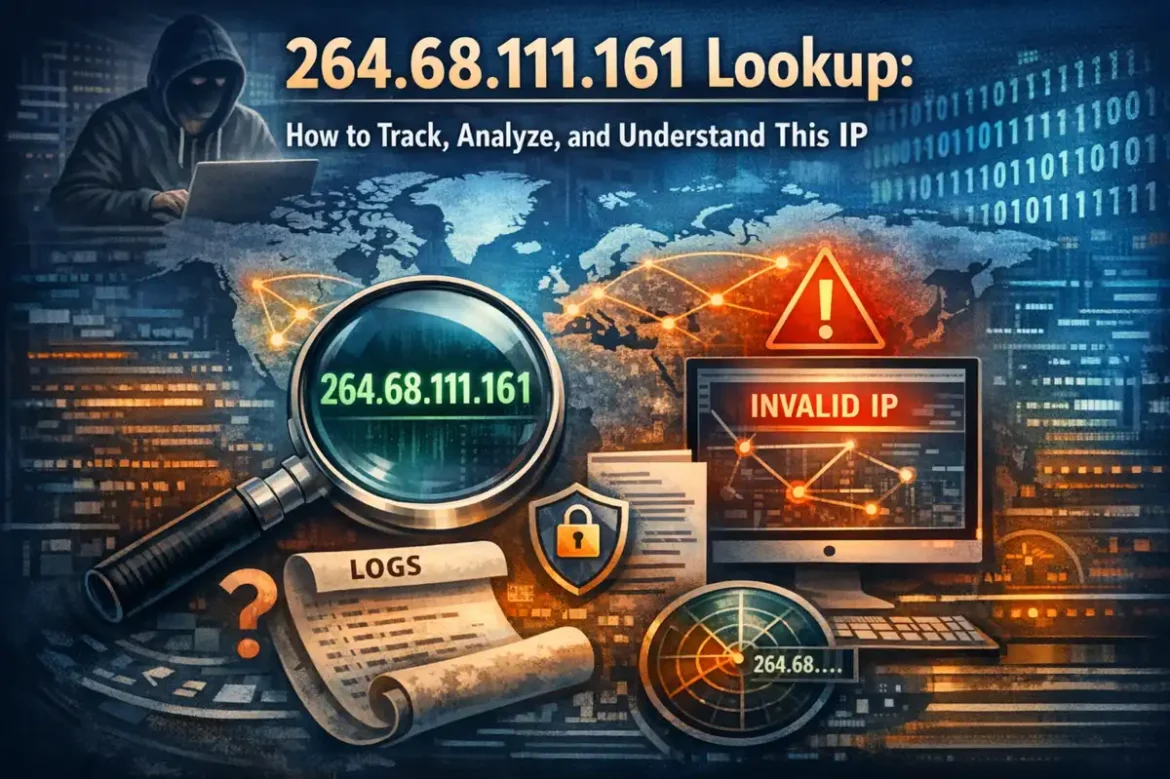
Interestingly, 264.68.111.161 has an octet with the number 264, which is unusual. Standard IPv4 addresses don’t exceed 255 in any octet. This might indicate that the number is not a valid public IP, a typo, or a representation from a different network system.
This small detail is crucial because it affects whether the IP can even exist on the global internet.
Understanding IP Addresses and Their Types
Before diving deeper into 264.68.111.161, it’s important to understand the types of IP addresses you may encounter:
Public vs Private IPs
- Public IP: Assigned by your Internet Service Provider (ISP) and can be seen online.
- Private IP: Used within local networks, not visible on the broader internet.
Your device may have multiple IPs, depending on whether it’s connected to a router, VPN, or other networking systems.
Static vs Dynamic IPs
- Static IP: Remains constant, often used for servers.
- Dynamic IP: Changes frequently, common for most personal internet connections.
Knowing the type can help you understand the potential risks and behaviors of an IP address like 264.68.111.161.
Potential Risks of Unfamiliar IPs
Seeing an unfamiliar IP can raise concerns. Here’s what you should consider:
- Cybersecurity Threats
Some IPs could be associated with suspicious activity. While 264.68.111.161 might be a harmless system log entry, it could also be flagged if someone is attempting unauthorized access. - Privacy Concerns
Certain IPs can reveal your general location. While they rarely pinpoint exact addresses, they might identify the city or ISP. - Network Performance Issues
Unrecognized IPs connected to your network could slow it down or interfere with your devices. - Phishing or Malware Attempts
Malicious actors may use specific IPs to attempt attacks. Awareness and monitoring are essential.
How to Check if 264.68.111.161 is Safe
You can perform a few practical steps to verify the safety of this IP:
Use IP Lookup Tools
Online tools allow you to see the general location, ISP, and domain associated with an IP. Note that 264.68.111.161 may not return valid results due to the unusual 264 octet.
Monitor Network Logs
If the IP shows repeated access attempts, it might indicate a device trying to connect without authorization.
Update Security Systems
Make sure your antivirus, firewall, and router firmware are up-to-date. These prevent malicious IPs from causing harm.
Block or Restrict Access
Most modern routers allow you to block specific IP addresses. If an IP appears suspicious, restricting it can help safeguard your network.
Why You Might See 264.68.111.161
There are a few common reasons this IP might appear:
- Misconfigured Software: Some apps log IPs incorrectly.
- Local Network Testing: IT professionals or software might generate test IPs.
- VPN or Proxy Use: Using VPNs or proxy networks can create unique or unusual IP addresses.
Understanding the context helps prevent unnecessary worry.

Real-Life Implications
If you’re managing a home network, here’s what noticing this IP could mean:
- Your devices are logging every connection, even minor system services.
- It might be a representation error, not a real-world IP.
- If repeated login attempts come from similar unusual IPs, it might indicate a cybersecurity review is needed.
From personal experience, I once noticed odd IP addresses in my home router logs. Initially, I panicked. After checking each through lookup tools and observing traffic patterns, it turned out to be my smart devices and VPN system generating unusual addresses. Awareness and research are key.
Tips for Managing Unknown IPs
- Regularly Check Your Router Logs
Weekly reviews can help you spot suspicious activity early. - Enable Firewalls and Alerts
Most routers allow alerts for unknown connections. - Educate Yourself on Network Basics
Understanding IPs, subnets, and ports makes you more confident managing your network. - Use VPN Services Wisely
VPNs can generate temporary IP addresses, sometimes resembling unusual numbers like 264.68.111.161.
Common Questions About 264.68.111.161
Is 264.68.111.161 a valid IP address?
Not exactly. IPv4 addresses have numbers only up to 255 in each octet, so 264 is unusual.
Can 264.68.111.161 harm my device?
If it’s not a real IP on the internet, it’s unlikely to cause direct harm. Monitoring is still recommended.
How can I block this IP?
Use your router’s admin panel to block unfamiliar IP addresses.
Could this be a local network IP?
Yes. It could be a testing address or internal network error.
Should I worry about it?
Mostly, no. Unusual logs are common, but repeated unauthorized access attempts are concerning.
Conclusion
In the end, 264.68.111.161 teaches us the importance of understanding IP addresses and network monitoring. While its unusual format suggests it’s not a standard public IP, staying alert to network activity is always wise.
You don’t need to panic when seeing unfamiliar IPs. Instead, check logs, verify through lookup tools, and maintain updated security systems. These small steps ensure your online presence remains secure.
Next time you notice an unusual IP, ask yourself: Is it a system error, a harmless device, or something worth investigating? Sharing this knowledge with friends or family can help them protect their networks too.
FAQs
1. What is an IP address?
An IP address identifies a device on a network, allowing communication between systems.
2. Can I trace 264.68.111.161?
Not easily. The 264 octet is invalid in IPv4, so standard trace tools may not work.
3. How do I know if an IP is safe?
Check through IP lookup tools, monitor network logs, and use security software.
4. Should I report suspicious IPs?
Yes, especially if you notice repeated access attempts or strange behavior.
5. Can VPNs create unusual IPs?
Yes. VPNs often generate temporary or non-standard IP addresses.
6. Are all unfamiliar IPs dangerous?
No. Many are harmless system or network entries. Context is key.
7. How do I block an IP on my network?
Access your router’s admin panel and use the block or deny feature.
8. Is 264.68.111.161 a private IP?
No. It appears non-standard. Private IP ranges are within 10.x.x.x, 172.16.x.x, or 192.168.x.x.
9. Can this IP indicate malware?
Unlikely by itself. Repeated unusual activity is a stronger indicator.
10. What is the best way to monitor unknown IPs?
Use router logs, firewalls, and security software for alerts on unusual activity.